Krunoslav Hrnjak
Krunoslav Hrnjak, M.Sc. E.E., PMP, is an ICT professional with over twenty years of experience. He has a strong passion for FOSS, with particular expertise in Java, Linux, and Oracle technologies.
He is a dynamic, flexible, and highly skilled software engineering professional, with proven capabilities in project management, stakeholder interaction, and coordination. He is consistently motivated to identify, adopt, and apply new solutions and methodologies at the forefront of technological development.
In addition to his technical and managerial work, he also serves as a Court-appointed Expert Witness in Informatics and Telecommunications.
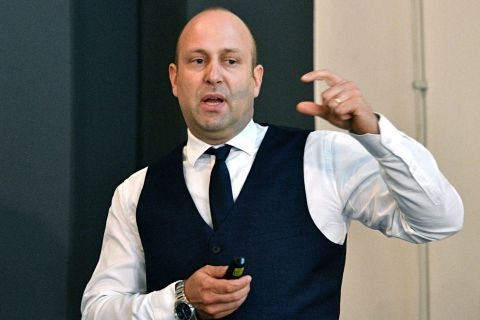
Talk: FOSS QES – Free and open source Qualified electronic signature
This paper explores the integration, implementation, and enhancement of qualified electronic signatures (QES) in Java-based desktop and web applications, addressing current advancements, challenges, and best practices in the field. Particular emphasis is placed on the use of the EU CEF eSignature Building Block and its Java libraries as a standardized and interoperable foundation for electronic signature services.
The paper examines proven methods for integrating QES into Java applications, enabling seamless interaction with external systems and platforms that support electronic signatures. Special attention is given to signature creation and validation processes, ensuring reliable and consistent validation results across different environments.
The implementation leverages the PKCS#11 (Public-Key Cryptography Standard) interface on Windows and Linux operating systems, as well as Microsoft Cryptography API (MS-CAPI) on Windows, allowing the use of smart cards for the creation of qualified electronic signatures.
Under the EU eIDAS (Electronic Identification, Authentication and Trust Services) Regulation, qualified electronic signatures have the same legal effect as handwritten signatures. EU Member States typically provide citizens with the means to create QES—most commonly through smart cards—at no additional cost. By utilizing this existing public infrastructure, organizations can enhance business processes, improve trust and interoperability, and achieve a higher level of cybersecurity.
Get your free ticket here https://www.entrio.hr/en/event/dorscluc-2026-28348 and see you at the DORS/CLUC 31!